Cubes Empire Champions
- 4.8
- Rating
- 10.00M
- Installs
- Free
- Price
 Analysis by App-foxy
I picked up Cubes Empire Champions expecting a simple arcade puzzle for short breaks, and that is exactly where it fits best. The game from Ilyon turns matching colored cubes into quick rounds built around clearing pieces, creating useful combinations, and deciding when to spend a move carefully rather than tapping as fast as possible. It is free to install, aimed at Everyone, and runs on Android devices using version 5.0 or later, so it is easy to consider for a shared household phone or tablet.
What makes it worth discussing is not a complicated story or a deep competitive system. Its appeal comes from how quickly someone can understand the board and begin playing, while still leaving room for better decisions as the puzzles become less forgiving. I found it especially convenient when I had only a few minutes available, although I also noticed the familiar tension of free-to-play puzzle games: the basic experience costs nothing, but optional purchases can become expensive if someone treats them as part of normal progress.
How it works in an everyday shared-device situation
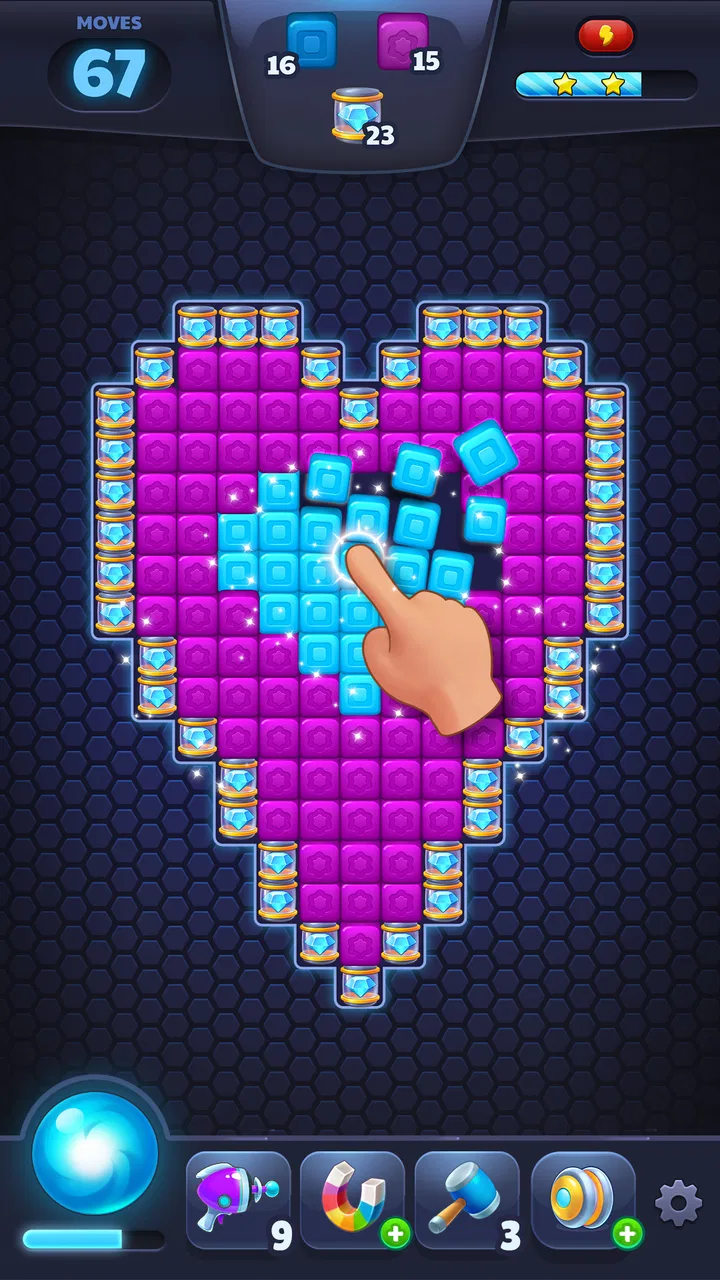
A realistic use case is a tablet left in the kitchen or living room. One person can play a few rounds while waiting for dinner, hand it to another household member, and come back later without needing a long explanation. The central interaction is visual and immediate: look for groups of matching cubes, tap the useful cluster, and watch the board change. That makes the game approachable for someone who does not usually play mobile games.
You May Also Like

 Blood Strike: 2.5 Anniversary
Blood Strike’s Loadouts Turn Every Drop Into a Tactical Gamble
A close look at Blood Strike’s custom loadouts: how fast access to signature weapons reshapes its battle royale rhythm, rewards preparation, and narrows the gap between fights.

 Pandora - Music & Podcasts
Pandora’s Music Is Easy to Start, but Harder to Recover
Pandora’s strength is its low-effort path from a seed to a station. Its weak spot is how much confidence it asks you to place in connection, setup, and quiet recovery.

 8 Ball Pool
 Is Built on Rivalries, Rematches, and Routine
A close look at the rivalries, rematches, shared routines, and unanswered safety questions that turn a quick pool match into a persistent mobile community.

 Samsung Music
’s Quiet Strength Is Playing What You Already Own
Its reach comes less from spectacle than from dependable access to a personal library. That simplicity is both the app’s strongest retention engine and its ceiling.

 AccuWeather: Weather Radar
AccuWeather Review: A Quick, Clear Forecast for Everyday Decisions
For everyday plans, the best forecast is the one you can understand quickly. AccuWeather makes rain timing, radar, and local conditions easy to act on, with a few trade-offs.

 Hill Climb Racing
Why Hill Climb Racing Still Turns Crashes Into One More Run
A tiny car, a bumpy hill and one more upgrade: Hill Climb Racing keeps resurfacing because its simple chaos makes every near-miss feel personal.
More From Our News Desk



I would not describe it as a game that needs a formal family session or a coordinated multiplayer plan. Its strength is the opposite. Each player can use it independently, and the next person can understand the board without learning a large control scheme. If several people share one device, the practical arrangement is simply to agree on whose turn it is and avoid restarting or spending anything without asking.
That last point matters more than it might seem. A puzzle game can look harmless on a shared screen, but progress, available resources, and purchase prompts can all affect the next player’s experience. I would treat the device as a shared activity space rather than assuming every person should make decisions for everyone else. The game itself is easy to pass around; the household rules around the device are what keep the experience comfortable.
For a child, the colorful presentation and straightforward matching idea are likely to be less intimidating than a strategy game filled with menus. For an adult, the same simplicity makes it useful as a short mental reset. I enjoyed that I could focus on the immediate board instead of remembering a long quest chain. Still, players who want a shared world, direct cooperation, or conversation-based teamwork should look elsewhere. This is primarily a solo puzzle experience played on a common device, not a household party game.
What to decide before handing over the device
Before letting several people use it, I would make three simple agreements. First, decide whether everyone is using the same progress or whether the device belongs mainly to one player. Second, agree that optional purchases require permission from the device owner. Third, decide whether a player can use boosters or other resources freely or should leave them for the person who normally plays.
These are not complicated technical settings; they are practical boundaries. The game is free to start, but its in-app items range from $0.99 to $209.99 per item. That broad range is the clearest reason not to hand a shared device to a child without discussing purchasing expectations. A free download does not automatically mean every part of the experience is cost-free.
I also recommend showing a younger player how to close a prompt instead of tapping through it quickly. In a colorful puzzle game, a button that helps continue play can feel like part of the normal interface. On a household tablet, teaching the difference between playing and buying is more useful than simply saying “do not press that.” It gives the player a repeatable habit they can use in other games too.
Another useful boundary is time. Because the rounds are easy to start, it is tempting to say “just one more” several times. I found the game works better when I decide in advance whether I am playing during a short break or settling in for a longer session. That small distinction prevents the app from taking over a shared device when someone else is waiting to use it.
Keeping progress and expectations clear
On a single device, the biggest source of friction is not learning the controls; it is remembering what another player changed. If one person is trying to conserve resources and another uses them to finish a difficult board, both choices can be reasonable, but they do not serve the same goal. I would keep one primary player in charge of long-term decisions and let casual users concentrate on the available rounds.
This arrangement is particularly sensible when the device belongs to an adult but is also used by a child. The adult can handle purchase decisions and decide whether the game remains installed, while the child gets the simple pleasure of matching cubes. I would avoid promising that everyone has a separate identity or isolated progress unless the device and the game visibly provide that option. The safe assumption for a shared installation is that actions may affect the same local experience.
For coordination, a short spoken rule works well: play the current board, do not spend anything, and leave the device ready for the next person. If the main player wants to use a special resource, they can do that during their own turn. This makes the game feel cooperative even though the gameplay itself is not built around simultaneous teamwork.
I also like using the game as a low-pressure turn-taking activity with a younger player. Instead of competing over who clears more cubes, an adult can ask the child which group looks most useful and let them choose. That turns a basic puzzle into a small exercise in observation and consequence. The child is still playing independently, but the adult can guide the thinking without taking control of every move.
The limitation is that this kind of coordination depends on trust and attention. There is no reason to assume that a shared-device arrangement will automatically protect one player’s choices from another. If preserving separate progress is essential, a game designed around explicit profiles or independent accounts may be a better fit. Cubes Empire Champions is convenient for passing around, but convenience is not the same as separation.
Age, trust, and the actual free-to-play trade-off
The Everyone age classification makes the basic theme easy to place in a household. There is no need to explain a complicated fictional setting before someone can enjoy it, and the matching format is familiar enough for children and adults. In my experience, the more important age question is not whether a player can understand the puzzles; it is whether they understand that optional purchases may appear during play.
That is where adult supervision becomes sensible, especially on a device connected to a payment method. I would let a child play if the household has already established a clear rule about purchases and the child knows to ask before accepting anything. I would be more cautious with a very young player who taps quickly or becomes frustrated when a level takes longer than expected. The game’s accessible presentation lowers the learning barrier, but it does not remove the need for responsible device use.
The free entry point is a genuine advantage. Someone can test the matching style without paying first, and a household can decide whether the game deserves storage space before spending anything. At the same time, the purchase range means I would not describe the complete experience as simply “free” in the everyday sense. Optional spending may be useful to some players, but it should remain a deliberate choice rather than a reflex caused by a difficult board.
I found the most satisfying way to play was to treat each move as a small planning problem. The largest visible group is not always the best first tap. A smaller match can sometimes open a more useful area, while an attractive move may leave awkward colors separated across the board. My practical tip is to pause for a moment before tapping, especially when the board offers several similar groups. That tiny delay makes the game feel more thoughtful and reduces the urge to spend help simply because I moved too quickly.
A second useful habit is to look at the result of a move rather than only the move itself. After a cluster disappears, new cubes can change the shape of the next decision. On easier boards, quick matching is perfectly fine; on more demanding moments, I prefer to identify the follow-up opportunity before committing. This is the difference between playing the current tap and planning a short sequence.
A third trade-off concerns frustration. When a puzzle does not go my way, I can either keep attempting the same style of move or step away and return later. Because the game is designed for short sessions, leaving it for a few minutes is often better than turning a casual break into an argument over a board. That advice is especially relevant in a household: the game should remain a small shared pleasure, not a reason for someone to guard the tablet.
Where it stands beside other arcade puzzle choices
Compared with a traditional match-three game, the cube-focused format feels more immediate because the board invites quick visual grouping rather than a long explanation of characters or story objectives. That makes it a strong choice for a first puzzle game or a short waiting-room activity. A conventional match-three alternative may be better for someone who wants elaborate level goals, a strong narrative wrapper, or a more familiar swap-based rhythm.
Compared with endless arcade games, this one is calmer. Endless runners and reflex games often reward speed and sustained attention, while the cube puzzles give me time to inspect the arrangement and choose a move. If you want a game that tests reaction time, this may feel too measured. If you prefer a brief challenge that can be paused mentally between everyday tasks, its slower decision-making is a benefit.
It also differs from competitive puzzle apps that put scores, rankings, or direct opponents at the center. I would choose this game when I want to concentrate on clearing the board rather than comparing my performance with friends. Someone who needs social competition, live matches, or a strong reason to return every day may find a dedicated multiplayer alternative more motivating.
The trade-off is depth. The matching loop is approachable because it does not bury the player under systems, but that same accessibility may limit its appeal for experienced puzzle fans seeking a complex campaign. I think of it as a reliable casual arcade title, not a replacement for a serious strategy puzzle. The right choice depends on whether your priority is immediate play or long-term mastery.
Device fit, access, and practical expectations
The Android requirement is modest: the game supports devices running version 5.0 or later. That broad compatibility makes it a reasonable candidate for an older household phone or a shared tablet, provided the device has enough room and performs comfortably with the installation. I would still test it on the actual device before promising it to several players, because age classification and operating-system support do not guarantee that every older screen feels equally pleasant.
Its popularity also suggests that it has reached a substantial audience, with over 10 million installs and an average rating of 4.9 from around 132 thousand ratings. Those figures do not replace personal testing, but they do make the game easier to recommend as a known casual option rather than an obscure experiment. The review volume, around 7.8 thousand, also indicates that many players have taken the time to comment on their experience.
I would not use popularity as a reason to ignore household fit. A highly rated game can still be wrong for someone who dislikes optional purchase prompts, needs separate profiles, or wants a game that can be enjoyed by several people at the same time. Ratings tell me that the basic loop works for many players; they do not decide whether the game belongs on your family device.
One question a reader may have is whether it is suitable for a quick daily routine. Yes, that is where I think it performs best. I can open it during a short wait, make progress through a few puzzles, and stop without needing to remember a complicated control scheme. Another question is whether a child can play alone. The matching concept is accessible, but I would pair independent play with a clear no-purchase rule and occasional adult awareness of how the shared device is being used.
If you are wondering whether it is worth paying anything, my answer is to begin with the free version and judge the normal loop first. Do not buy simply because a board becomes inconvenient. Spend only if the optional item solves a problem you consciously want solved, and keep the household’s purchase boundary in place. The game is enjoyable without turning every difficult moment into a transaction.
My household verdict after using it
After playing it as a casual arcade puzzle, I see Cubes Empire Champions as a good shared-device candidate when expectations are simple: one person plays at a time, everyone understands that progress may be shared, and purchases require permission. Its strongest quality is the low barrier to entry. A child can understand the matching idea, an adult can enjoy the planning, and neither needs a long tutorial before the first useful decision.
I would recommend it to households that want a colorful solo game for short breaks, especially when the device is passed between people rather than used for a formal group activity. I would skip it for families that need separate accounts, strong progress boundaries, direct cooperation, or a completely purchase-free environment. I would also point experienced puzzle players toward a deeper alternative if they want intricate systems instead of quick cube-clearing sessions.
The game’s free starting point, Everyone rating, broad Android compatibility, and large player base make it easy to try. The main responsibility falls outside the puzzle board: keep spending intentional, clarify who owns the progress, and avoid treating a shared tablet as if every player has an invisible private space. With those boundaries in place, I found the experience pleasant, approachable, and easy to recommend for everyday downtime.
My final view is deliberately practical. This is not the game I would choose for a family tournament or a long strategic campaign, but it is a solid option when someone wants a quick arcade puzzle that can be understood in seconds and enjoyed in short bursts. The best way to use it at home is as a simple turn-based pastime, with trust and purchase rules agreed before the first tap.
FAQs for Cubes Empire Champions
01What is Cubes Empire Champions about?
Cubes Empire Champions is a captivating puzzle game where players embark on a journey to clear levels by strategically matching and blasting colored cubes. With various challenges and power-ups, the game offers a blend of strategy and fun, making it appealing for puzzle enthusiasts looking for an engaging experience.
02Is Cubes Empire Champions free to play?
Yes, Cubes Empire Champions is free to download and play. However, the game contains in-app purchases that allow players to buy boosters and other items to enhance their gaming experience. These purchases are optional, and players can choose to enjoy the game without spending money.
03What are the key features of Cubes Empire Champions?
Cubes Empire Champions features thousands of challenging levels, unique power-ups, and daily rewards. Players can enjoy various game modes and compete in leaderboards. The intuitive gameplay mechanics make it easy for both new and experienced players to dive into the world of puzzle-solving.
04Does Cubes Empire Champions require an internet connection?
Cubes Empire Champions can be played offline, so an internet connection is not required for basic gameplay. However, some features like leaderboards and events may require an internet connection to access. Playing online also ensures that you receive updates and new content.
05Are there any tips for beginners in Cubes Empire Champions?
For beginners, it’s essential to focus on creating and using power-ups effectively. Combining more cubes can generate powerful boosters that clear larger areas. Pay attention to the level objectives and plan your moves accordingly to maximize your score and progress through the levels efficiently.
Pros
- Engaging puzzle gameplay mechanics.
- Vibrant and colorful graphics.
- Regular updates with new levels.
- User-friendly interface.
- Minimal ads for free users.
Cons
- Requires internet for daily rewards.
- In-app purchases can be expensive.
- Difficulty spikes in later levels.
- Limited lives slow down gameplay.
- Some features require social media login.

Cubes Empire Champions
Gallery